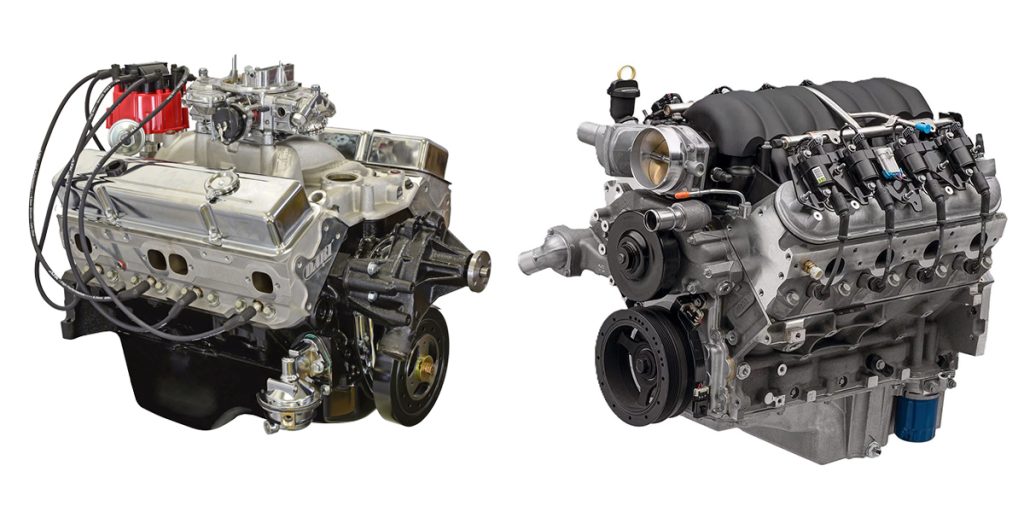
For over four decades, the traditional Gen I and Gen II Small Block Chevrolet (SBC) and its heavy-hitting sibling, the Big Block Chevrolet (BBC), reigned supreme as the standard for American pushrod performance. Introduced in 1955 and 1965 respectively, these cast-iron powerhouses established a blueprint for displacement, simplicity, and aftermarket versatility. However, when General Motors launched the Gen III LS1 V8 in the 1997 Corvette, it wasn’t merely an upgrade, it was a clean-sheet. While traditionalists still want classic iron, an objective evaluation of block architecture, valvetrain geometry, and airflow dynamics explains why the LS platform fundamentally altered the performance landscape.
Block Geometry and Structural Stiffness
The physical foundation of the LS engine represents its biggest departure from Small Block and Big Block designs. Traditional SBC and BBC engines rely on a 2-bolt or 4-bolt main cap design attached to a short-skirt block deck. In this classic configuration, main caps are secured only along the vertical plane, allowing block flex and main cap walk under high cylinder pressures or elevated RPM limits.
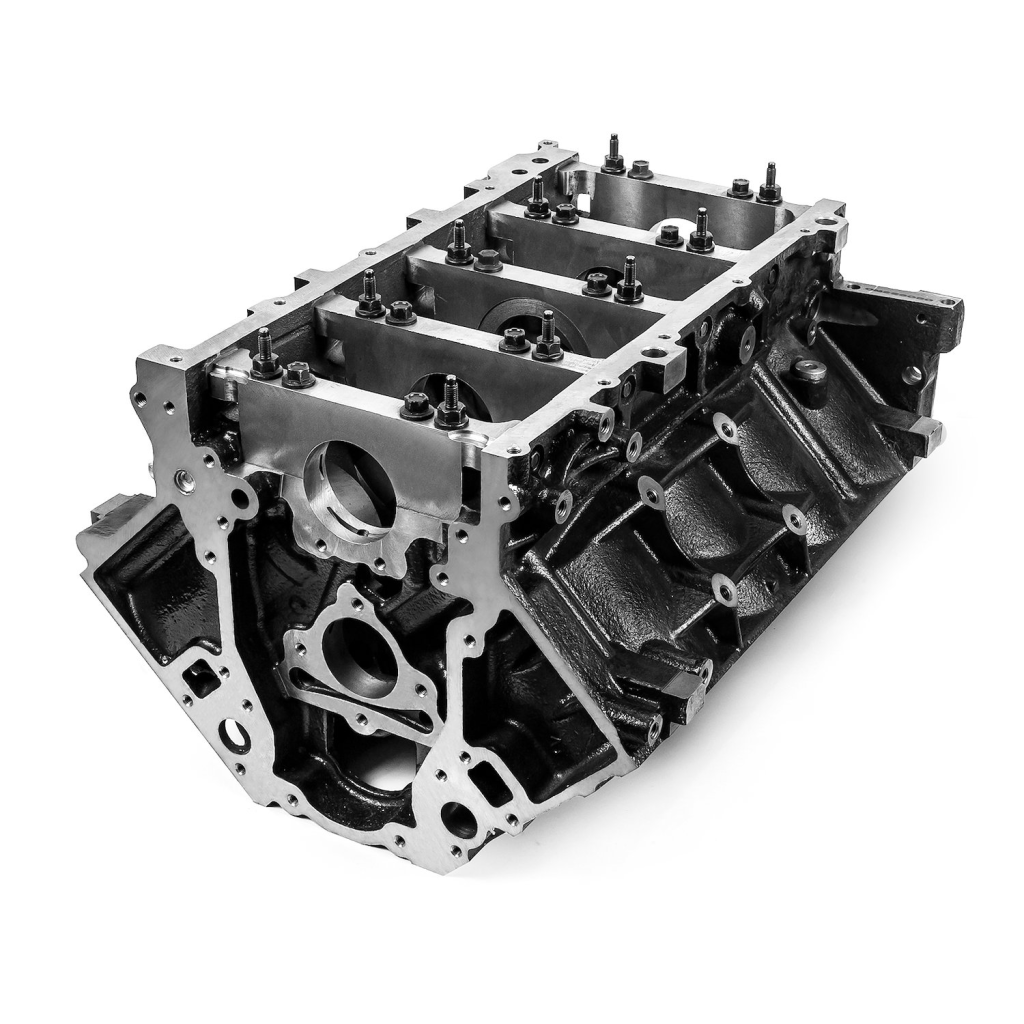
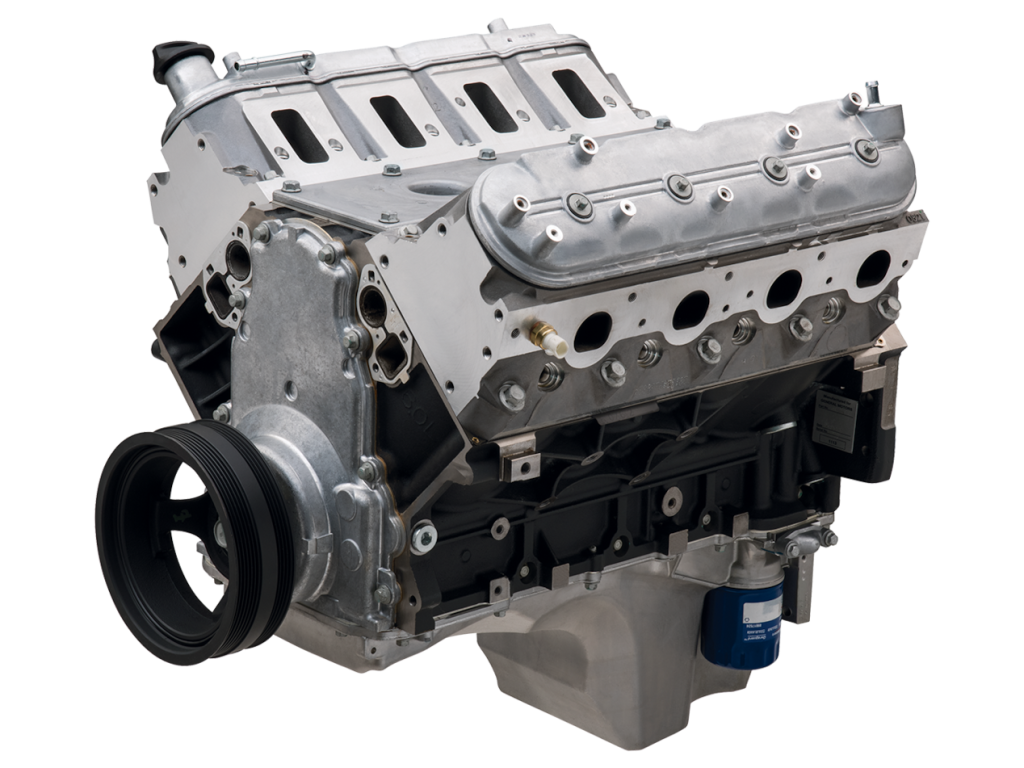
The LS platform resolves this structural weakness through a deep-skirt block design. The crankcase extends well below the centerline of the crankshaft main journals, creating a deep side skirt that allows for 6-bolt main bearing caps. Each main cap is secured by four vertical bolts (two inner studs, two outer bolts) and two horizontal cross-bolts that clamp through the side of the engine skirt.
Torsional Rigidity: Cross-bolted main caps convert the bottom end into a rigid box structure, virtually eliminating main cap walk and lower-end distortion.
Aluminum vs. Iron Efficiency: The structural strength of the deep-skirt design allows aluminum LS blocks to easily handle forced induction and high-horsepower loads that would split an early cast-iron SBC block down the lifter valley.
Deck Height and Mass Packaging: Despite offering displacement up to 7.0 liters (427 cu. in. in the LS7), the LS maintains a standard deck height of 9.240 inches (compared to 9.025 inches for the SBC and 9.800–10.200 inches for the BBC). It packages like a compact Small Block while breathing like a Big Block.
Valvetrain Dynamics and Bore Spacing Improvement
In classic SBC architecture, cylinder performance is throttled by restrictive valvetrain geometry. Legacy Small Blocks feature a 4.400-inch bore center spacing, which limits maximum cylinder bore diameter and forces pushrods to pass directly through the intake port footprint. Furthermore, classic SBC valves are inclined at a steep 23-degree angle relative to the cylinder bore axis (and 26 degrees on classic BBCs), creating a shrouded combustion chamber that requires heavy piston domes to generate compression.
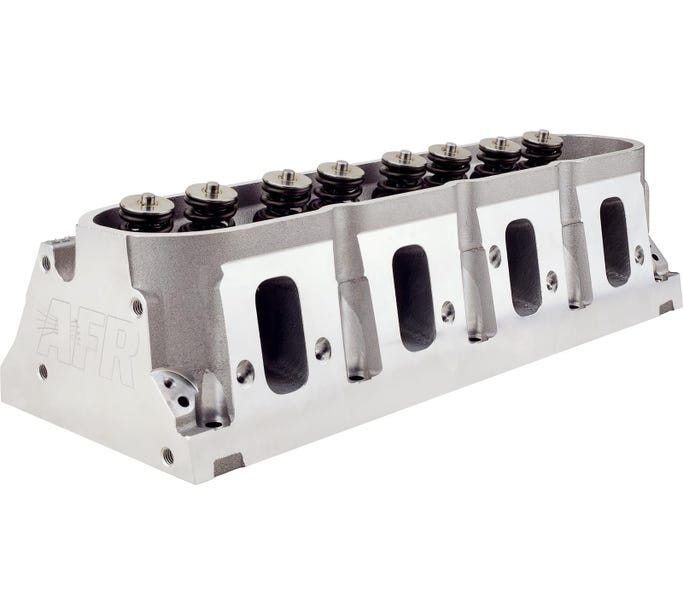
The LS engine re-engineers this geometric relationship entirely while maintaining a identical 4.400-inch bore center spacing:
1. Shallower Valve Angles
Standard LS heads feature a 15-degree valve angle (LS1/LS6/LS3) or an even flatter 12-degree valve angle (LS7). Laying the valves flatter opens up the combustion chamber, reduces valve shrouding against the cylinder wall, and allows high compression ratios with flat-top pistons rather than heavy dome pistons.
2. Raised Intake Ports and Camshaft Position
The LS camshaft sits significantly higher in the block relative to the crankshaft journal centerline than in a standard SBC. Raising the camshaft position straightens pushrod angles and allows intake ports to run high and direct to the intake valves without bending around pushrod tubes.
3. Valvetrain Stability
Traditional SBC/BBC engines utilize stud-mounted, non-guided rocker arms that require guideplates or self-aligning rockers, creating flex at high RPM. The LS uses pedestal-mounted, shaft-type trunnion rocker arms bolt directly into cast bosses on the cylinder head. This rigid setup maintains precise geometry past 7,000 RPM with off-the-shelf components.
Gas Exchange: Cylinder Head Flow and Firing Order
Airflow is where the LS platform completely distances itself from traditional Big and Small Blocks. On a traditional SBC, cylinder heads feature symmetrical port pairing—the center two intake ports are placed side-by-side, as are the center two exhaust ports (“paired ports”). This design leads to severe thermal concentration between the two central cylinders and uneven cylinder-to-cylinder fuel distribution.
The LS introduced equally spaced, replicated ports. Every single intake port and exhaust port on an LS head has the exact same runner length, entrance angle, and volume as its neighbor. This ensures equal airflow, balanced fuel delivery, and uniform cooling across all eight cylinders.
Additionally, GM revised the ignition firing order on the LS to 1-8-7-2-6-5-4-3 (a 4/7 swap compared to the traditional 1-8-4-3-6-5-7-2 SBC pattern).
Vibration Reduction: The revised firing order alternates power strokes across engine banks more evenly, reducing primary torsional stress on the crankshaft.
Smooth Power Delivery: Smooths out main bearing loading, allowing higher sustained operational engine speeds with reduced harmonic friction.
Cylinder Head Flow Comparison
| Platform | Factory Head Casting Examples | Valve Angle | Peak Intake Flow (Stock CFM @ .600″ Lift) | Peak Exhaust Flow (Stock CFM @ .600″ Lift) |
| Classic SBC | Camel Hump / Double Hump (041/186) | 23° | ~180 – 200 CFM | ~120 – 140 CFM |
| Late SBC (Vortec) | L31 Vortec (062/906) | 23° | ~230 – 240 CFM | ~150 – 160 CFM |
| Classic BBC | Rectangular Port Iron (781/049) | 26° | ~270 – 290 CFM | ~180 – 190 CFM |
| LS Cathedral Port | LS1 / LS6 / LS2 (243/799) | 15° | ~250 – 270 CFM | ~180 – 200 CFM |
| LS Rectangular Port | LS3 / L92 (823/821) | 15° | ~310 – 330 CFM | ~200 – 210 CFM |
| LS7 High Performance | LS7 (273) | 12° | ~360 – 370 CFM | ~220 – 230 CFM |
Where the Legacy SBC and BBC Still Hold the Advantage
Despite the geometric and volumetric superiority of the LS, traditional Small Block and Big Block Chevys are not obsolete. In specific automotive and mechanical applications, legacy architecture holds undeniable advantages:
1. Raw Displacement Potential (Big Block Supremacy)
The LS platform’s maximum displacement limit tops out around 454 to 468 cubic inches using aftermarket tall-deck blocks. The Big Block Chevy, however, features a 4.840-inch bore spacing (compared to the LS’s 4.400-inch). This massive footprint allows aftermarket BBC blocks (such as Merlin or Dart) to stretch to 632 cubic inches—or over 700+ cubic inches with custom tall decks. For unassisted, naturally aspirated torque in heavy marine vessels or extreme drag racing, nothing replaces a Big Block’s physical displacement capability.
2. Low-RPM Off-Idle Torque Production
Because traditional SBC and BBC engines feature smaller, velocity-focused intake runners and longer stroke-to-bore ratios in factory configurations, they build aggressive off-idle torque below 2,500 RPM. The LS engine, designed around high-rpm breathing, often feels soft on torque at immediate idle compared to a high-compression 454 BBC or a low-end heavy 383 SBC stroker unless paired with deep axle gears or high-stall torque converters.
3. Mechanical Simplicity and Legacy Fitment
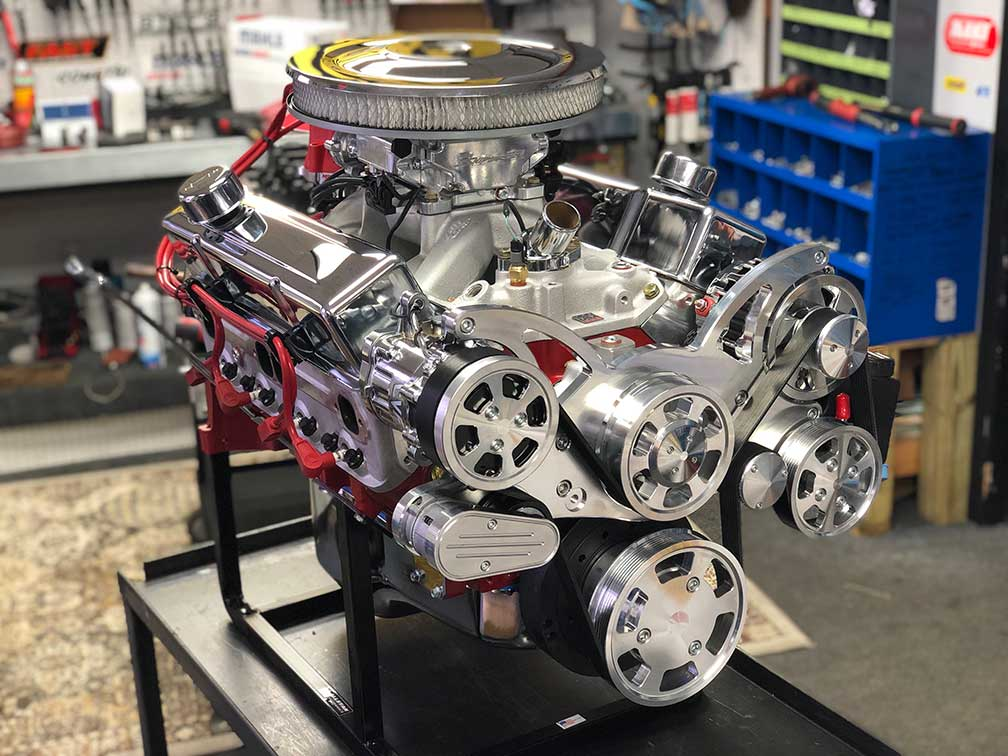
Distributor-Based Ignition: Traditional SBC/BBC engines run a single distributor and mechanical fuel pump setup. They require zero sensors, zero trigger wheels, and no ECU wiring harness to run.
Direct Chassis Bolt-In: In 1955–1990 classic vehicles, traditional Small Blocks drop directly onto factory engine mounts with stock oil pan clearance, mechanical clutch linkages, and column shifter linkages. An LS swap requires adapter plates, specialized swap oil pans, custom headers, and fuel system bypass plumbing.
Mechanical Evolution
The LS engine’s dominance isn’t based on hype; it is a direct consequence of superior geometry. By combining a deep-skirt 6-bolt block, 15-degree flat valve angles, replicated high-flow ports, and a stabilized pedestal valvetrain, GM engineers extracted Big Block airflow out of a package lighter and smaller than a traditional iron Small Block.
While the Big Block remains king of absolute displacement and the classic Small Block remains an unbeatable budget drop-in for vintage iron, the LS architecture represents the peak refinement of the traditional pushrod V8 design.
If you need any parts for your LS Swap or traditional SBC or BBC, hop on SS396.com or give our friendly techs a call at (203) 235-1200!