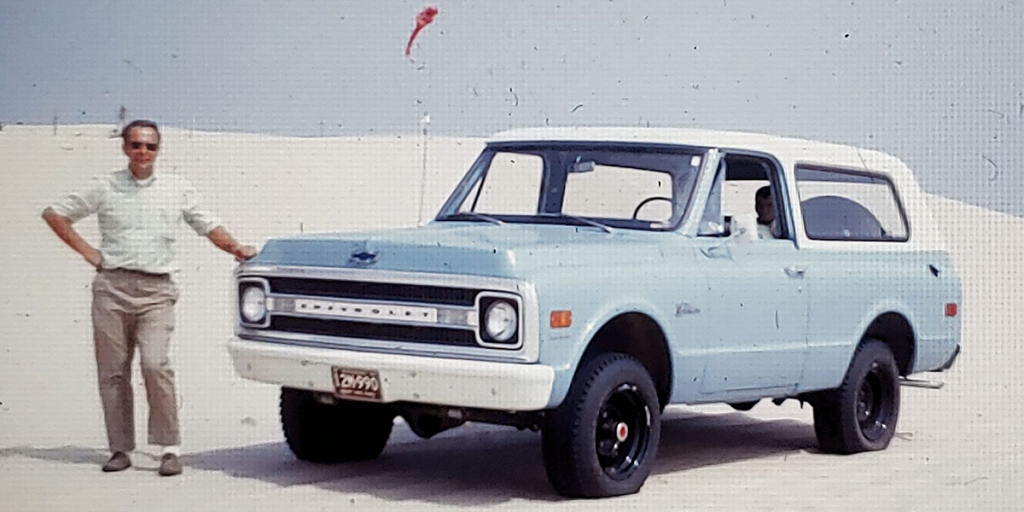
When you drop the hood on a classic 1964–1972 GM A-body like the Chevelle, El Camino, or Monte Carlo, or even Camaro or Nova, it is easy to get lost in the sheer muscle of a big-block V8 and the glint of fresh chrome. But the second you take that car out on the open road, everything you feel through the steering wheel comes down to what is happening beneath the front fenders.
For decades, classic Chevelle owners facing a tired, sloppy front suspension have stood at a crossroads: do you press in new factory rubber bushings and ball joints to keep things completely original, or do you bolt on a set of modern tubular control arms? The answer depends entirely on how you intend to drive your car and what kind of road feel you expect when you hit highway speeds.
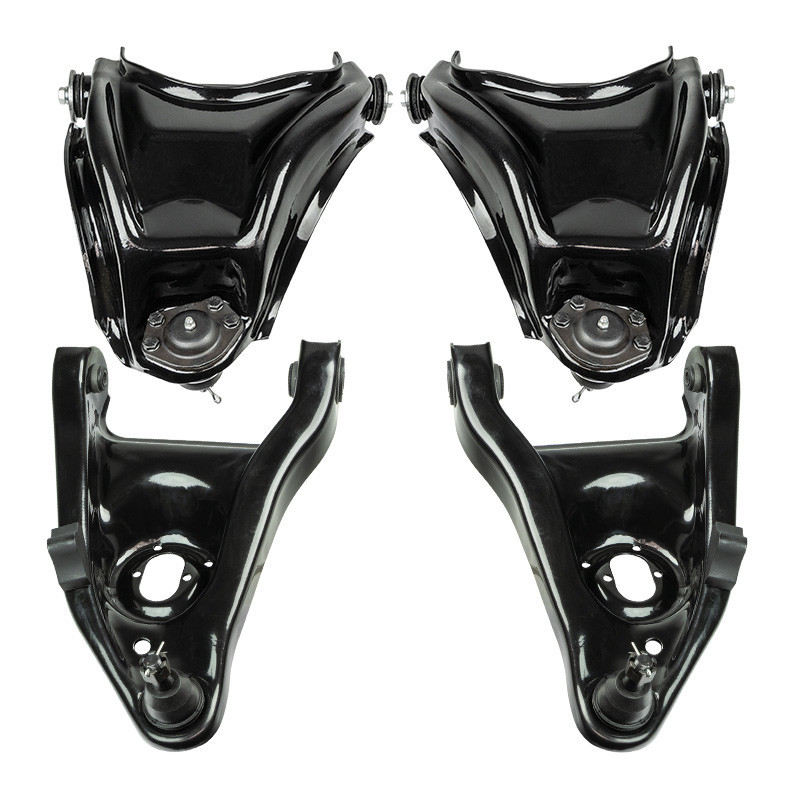
If your goal is a concours-correct restoration, a matching-numbers build, or a basic weekend cruiser for casual local car shows, a stock front suspension rebuild makes complete sense. Back in the 1960s, GM engineered the A-body front end to deliver a soft, compliant ride over unpaved roads and highway expansion joints, isolated by thick rubber bushings. Rebuilding your original stamped-steel control arms with fresh ball joints, tie rod ends, and factory-style bushings brings back that soft, classic feel. In a pure cruiser running traditional narrow radial tires, a stock rebuild eliminates slop, restores factory ride height, and keeps the build authentic without altering the car’s original DNA.
The limits of factory geometry quickly reveal themselves the moment you merge onto a modern highway or bolt on a set of wide, high-performance radial tires. Standard A-body control arms were designed in an era of tall, skinny bias-ply tires, meaning the factory suspension geometry tops out at around zero to one degree of positive caster. At 70 mph, a stock-geometry front end can feel floaty and light, forcing you to constantly make small steering corrections just to keep the car tracking straight in its lane. Furthermore, when you throw a stock A-body hard into a corner, the upper control arm pushes the top of the outside tire outward—a condition known as positive camber roll—which causes the tire to ride on its outer edge rather than staying flat against the pavement.
When Upgrading Suspension Makes Sense
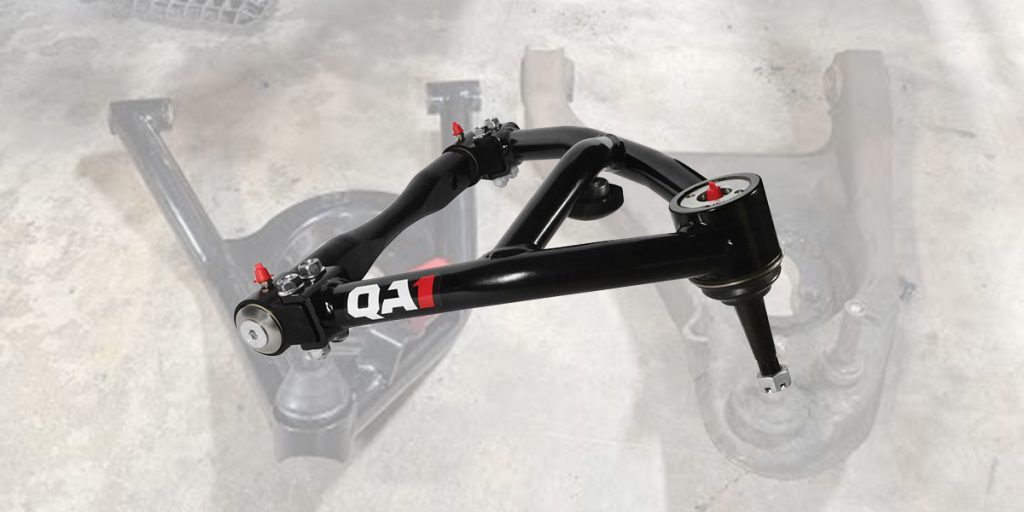
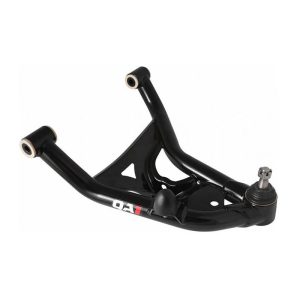
This geometric bottleneck is precisely why upgrading to tubular control arms has become one of the most popular performance modifications in the muscle car community. High-quality aftermarket tubular upper control arms are engineered with altered ball joint angles that automatically inject four to six degrees of positive caster into the alignment. That extra positive caster completely transforms the driving experience: straight-line tracking becomes rock solid, highway wander disappears, and the steering wheel naturally wants to snap back to center coming out of a turn, much like a modern performance coupe.
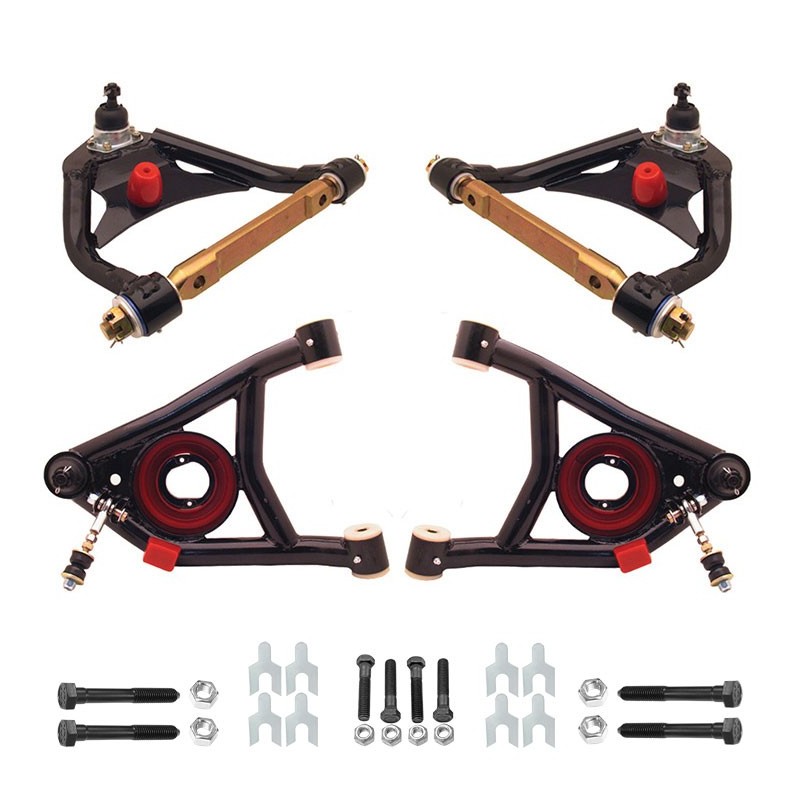
Beyond fixing the caster angle, tubular control arms revise the car’s camber curve during body roll, pulling the top of the tire inward during hard cornering to keep the tire’s contact patch glued flat to the road. Constructed from heavy-duty mandrel-bent tubing, tubular arms also eliminate the flex associated with aging stamped steel while offering built-in clearance for bigger sway bars, lowering springs, or coilover conversions. Whether you are preserving factory heritage with a classic stock overhaul or upgrading to tubular geometry for modern handling, getting the front end dialled in is what turns a project car into a machine you genuinely love to drive.
Quick Comparison: Stock Rebuild vs. Tubular Upgrade
| Feature | Stock Factory Rebuild | Tubular Control Arm Upgrade |
| Primary Use | OE Resto / Local Cruising | Performance Street / Pro-Touring |
| Tire Compatibility | Factory / Narrow Radials | Wide Modern Radial Tires |
| Caster Capability | 0° to +1° | +3° to +6° (Built-in) |
| Straight-Line Tracking | Standard | High Stability / Self-Centering |
| Installation | Direct Press-in Replacement | Bolt-on Upgrade |
The Verdict
If you’re on a budget and just looking for a basic cruiser, rebuilding the stock suspension is fine. You can even upgrade to a polyurethane bushing instead of rubber to help stiffen things up a bit for better performance.
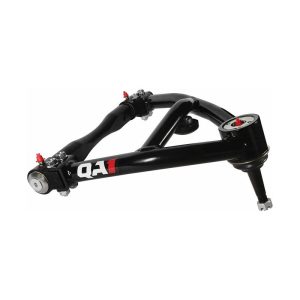
In reality though, unless you’re going for a bone-stock restoration, there’s not many other excuses to not upgrade to tubular control arms. Even if your budget doesn’t allow for all four control arms, just replacing the uppers will give you a huge improvement in geometry. Your car will drive straighter, more predictable, and just be overall nicer to drive.
If you need more help deciding what’s best for your ride, or you’re ready to order, hop on SS396.com or give our friendly techs a call at (203) 235-1200!