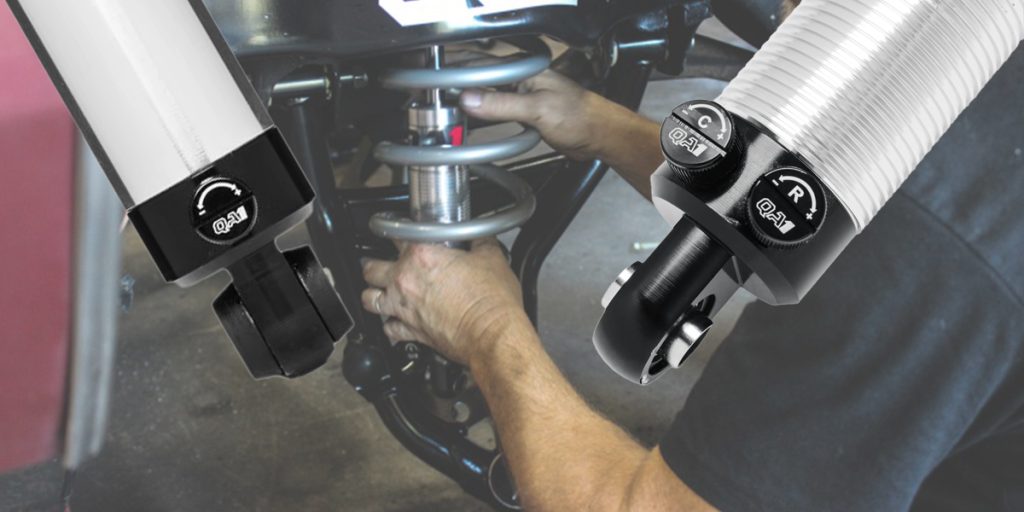
Single, dual, or triple adjustable shocks? Do you need to adjust your shocks? Are triple adjustable three times better than single? The answer really comes down to how you plan on using your vehicle. If you’re just cruising the back roads on a Sunday afternoon, you don’t need triple adjustable shocks. If you’re trying to shave tenths off the road course, then a triple is what you need.
An adjustment knob changes the settings on a shock, or how it reacts under different conditions. This is accomplished by limiting the amount of fluid that flows through different passages inside the shock.
Single Adjustable Shocks (1-Way)
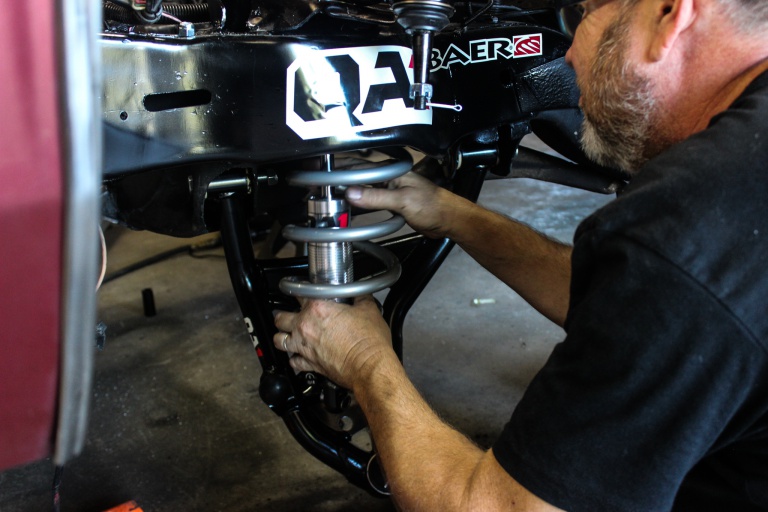
Single adjustable shocks feature one external adjuster knob or clicker that changes the compression on the shock. Think about when you hit a bump, it determines how much that shock is going to slow down the suspension.
How They Work
Most single adjustable shocks control rebound damping exclusively. A needle valve inside the main shaft restricts bypass fluid as the shock extends. Some budget designs attempt to adjust compression and rebound simultaneously on a fixed curve, but rebound-only control remains the industry standard for performance tuning.
Pros
Simplicity: Easy to set up without requiring a background in suspension dynamics.
Cost Effective: Lowest barrier to entry for aftermarket coilovers and performance dampers.
Repeatability: Fewer variables make it straightforward to dial in a baseline for street or casual track days.
Cons
Fixed Compression Curve: You cannot stiffen the chassis during cornering without also stiffening how the car reacts to harsh bumps.
Limited Tuning Envelope: Offers narrow adjustment ranges compared to multi-way systems.
Dual Adjustable Shocks (2-Way)
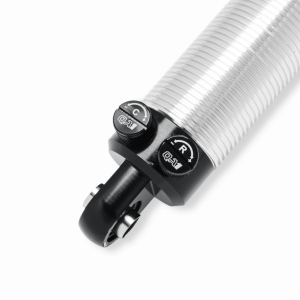
Dual adjustable shocks provide independent control over compression and rebound damping forces. When hitting that bump you can adjust how fast it reacts to the compression, but also the rebound.
How They Work
A 2-way damper separates the fluid circuits. Rebound is typically controlled via a bleed needle inside the main shaft, while compression is regulated by a base valve located either at the bottom of the shock body or inside a remote/piggyback reservoir.
Pros
Independent Chassis Control: You can stiffen low-speed compression to control body roll without making rebound so stiff that the tires lose contact over ripples.
Versatility: Allows precise weight-transfer tuning for drag racing (e.g., loose compression front, tight rebound rear) or autocross/road racing.
Cons
Increased Complexity: Incorrect settings can easily upset chassis balance or cause tire hop.
Higher Cost: Might require additional fluid routing and external reservoir hardware.
Triple Adjustable Shocks (3-Way)
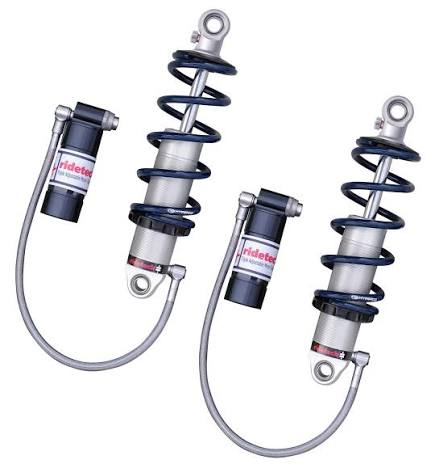
Triple adjustable shocks split compression into two distinct knobs: low-speed and high-speed, while maintaining independent rebound control. These are for when you’re wanting to really dial in your ride for specific track conditions.
How They Work
The shock body utilizes a remote reservoir containing a dual-stage base valve. A small needle valve handles low-speed fluid flow (driver inputs), while a spring-loaded preloaded valve or shim stack controls high-speed fluid flow (impacts). The three adjusters typically govern:
Rebound (Overall extension speed)
Low-Speed Compression (Roll, dive, squat, pitch)
High-Speed Compression (Bumps, curbs, sharp surface changes)
Pros
Zero Compromise: You can dial in firm low-speed compression for crisp turn-in while keeping high-speed compression soft enough to blow off over harsh track curbing.
Maximum Traction: Keeps the tire contact patch plant across highly irregular road surfaces.
Cons
Cost & Maintenance: Significant financial investment; requires frequent rebuilds and specialized servicing.
Tuning Pitfalls: Easy to misconfigure; usually requires shock dyno graphs and telemetry logging to optimize effectively.
Why You Need To Adjust Your Shocks
Shocks are one of the biggest things you can change to make a difference in the way a car rides. There’s a reason that race teams have entire engineers, teams, and trucks dedicated to just shocks. You can make a car go from floating down the road, to stiff as a board with just adjusting shocks and nothing else.
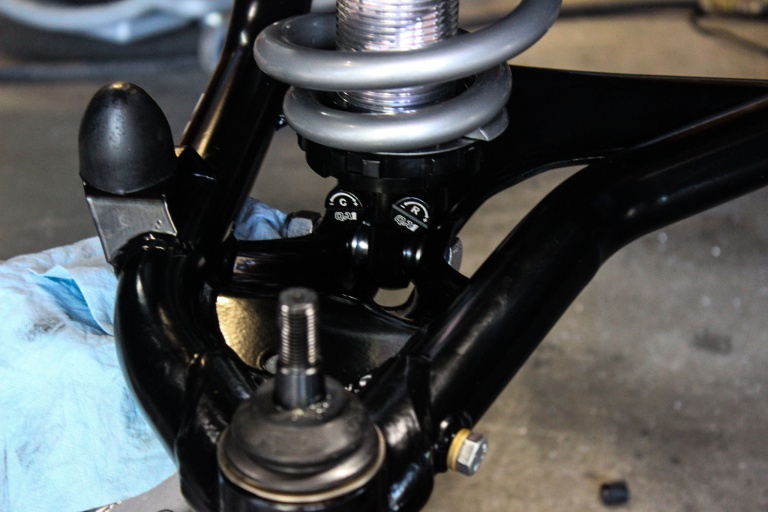
Having adjustable shocks allows you to really dial in the ride for your preference. If you’re going on a road trip and have some extra weight in the trunk, you can tweak the knobs to stiff up compression a bit so you won’t bottom on bumps.
With a traditional coil spring, the shocks will generally live in the middle of the settings with slight adjustments for driver preference. However on an air ride equipped car, the compression is roughly in the middle, but rebound will be highly increased. Air springs and coil springs react differently.
Downsides to Adjustable Shocks
Are there any downsides to having adjustable shocks? In short, no. Just because they adjust doesn’t mean you have to constantly mess with them. Generally after you dial them in to your liking, you won’t touch them again.
The only real downside is if you get in there and start messing with the adjustments, you can make the car handle really badly. However, all you have to do is start over and go from there. The manufactures are also able to give great baseline settings.
| Shock Type | Rebound Adjustment | Low-Speed Compression | High-Speed Compression | Best Application |
| Single (1-Way) | Yes | Tied to Rebound or Fixed | Fixed | Daily drivers, spirit street, entry autocross |
| Dual (2-Way) | Yes | Yes (Combined Low/High) | Yes (Combined Low/High) | Advanced track day, drag racing, serious street/strip |
| Triple (3-Way) | Yes | Yes | Yes | Dedicated motorsports, competitive time attack, off-road racing |
Selecting the right damper comes down to balancing your tuning capability against your performance requirements. While 3-way shocks offer the ultimate in chassis control, a well-valved 2-way shock often provides the sweet spot for track drivers seeking performance without getting lost in complex setup variables.
If you’re looking to upgrade the shocks on your ride, hop on SS396.com or give our friendly techs a call at (203) 235-1200!