When planning an LS swap, a question you will have to ask is if you want Drive-by-Cable (DBC) or a Drive-by-Wire (DBW) throttle body system. While both mechanisms deliver air to the intake manifold, they operate on completely different principles—one relying on pure mechanical linkage and the other on electronic signals from the gas pedal and computer.
Both setups directly impact your budget, wiring harness complexity, pedal feel, tuning requirements, and overall driving experience.
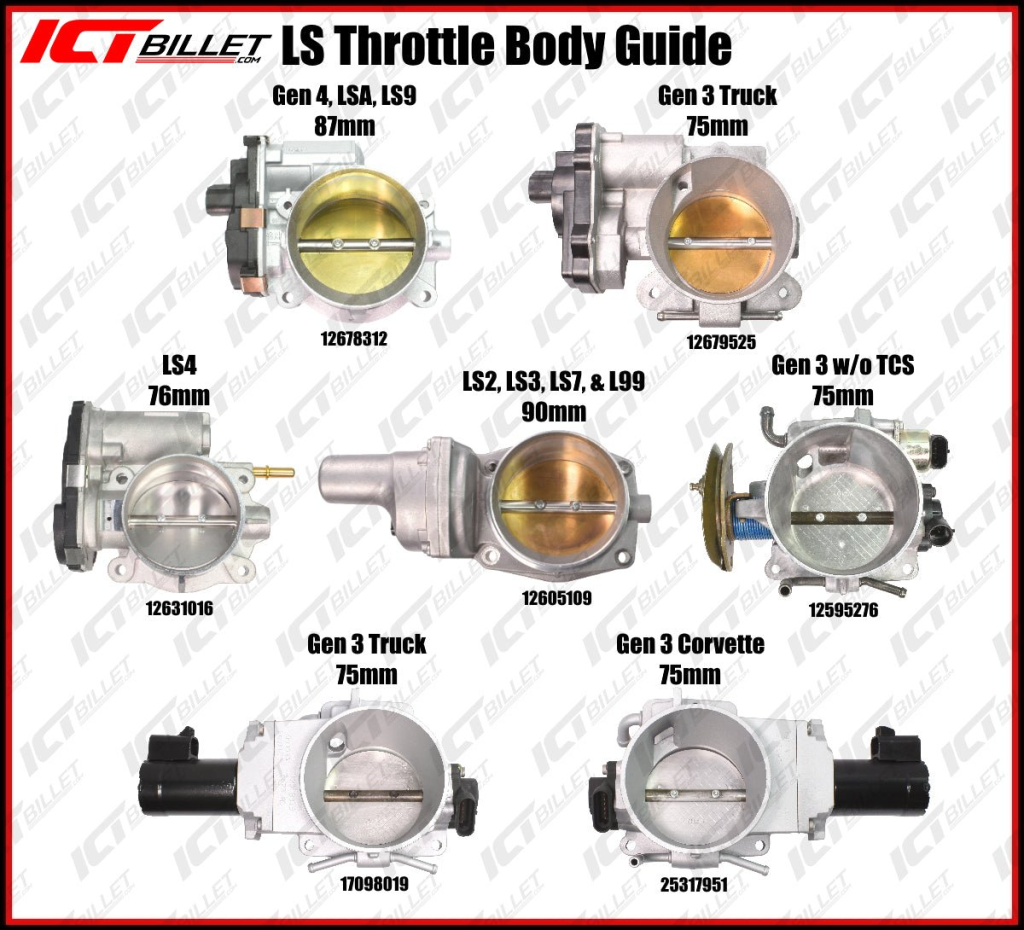
Drive-by-Cable (DBC) Throttle Body
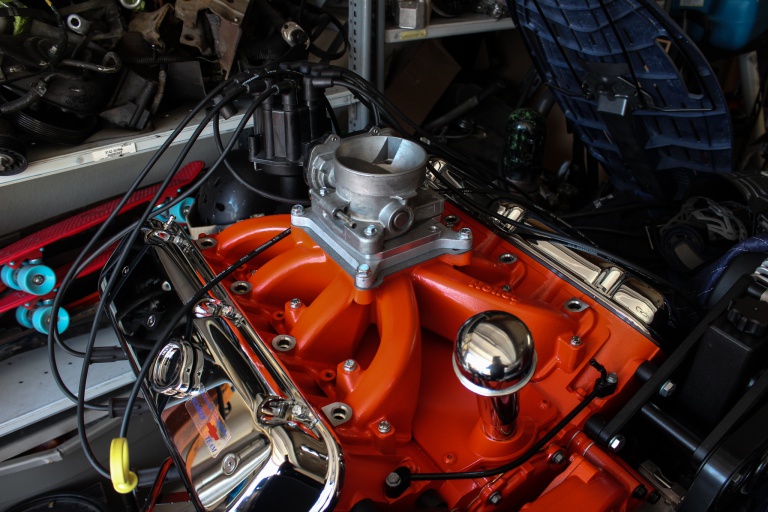
Drive-by-Cable is the traditional mechanical approach. A physical braided steel cable connects your accelerator pedal directly to the throttle body blade. When you press the pedal, you manually pull the throttle blade open.
To manage idle speed and monitor engine load, DBC throttle bodies rely on two dedicated external sensors mounted directly on the throttle body housing:
Throttle Position Sensor (TPS): Measures the angle/percentage of throttle blade opening.
Idle Air Control (IAC) Valve: A small stepper motor that adjusts an internal air bypass channel to control engine idle speed when the throttle blade is fully closed.
DBC was standard on early LS-series engines, including 1997–2002 Corvettes (early C5s varied), 1998–2002 F-Bodies (Camaro/Firebird), and 1999–2002 GM trucks/SUVs (4.8L, 5.3L, 6.0L Gen III engines).
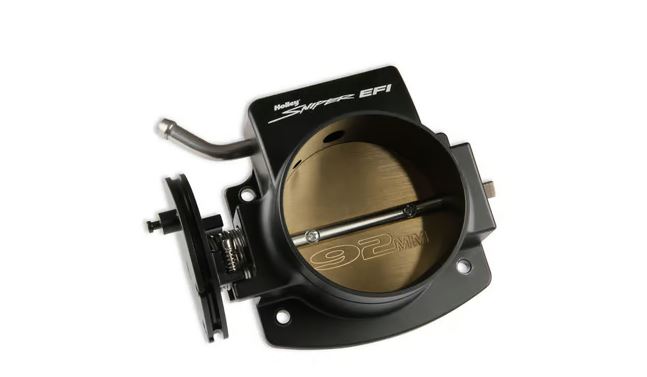
Pros of DBC
Instant Mechanical Response: There is zero computer delay between pedal movement and throttle plate movement. The feel is direct, precise, and highly predictable.
Simpler Wiring Harness: Because the ECM only reads the TPS and controls the IAC valve, the throttle portion of the engine wiring harness is simple and lightweight.
Easier Aftermarket Pedal Integration: You can retain your project car’s factory gas pedal and cable linkage in most classic cars, hot rods, or vintage trucks without modifying the pedal assembly under the dash.
Cost-Effective Components: Replacement TPS sensors and IAC valves are inexpensive, universally available, and easy to diagnose with a standard multimeter.
Cons of DBC
More Moving Parts: Mechanical cables can stretch, bind, snap, or require periodic adjustment to achieve full wide-open throttle (WOT).
Limited Modern Feature Support: DBC setups cannot natively support modern electronic features like built-in cruise control (requires an external mechanical cruise module), traction control, or advanced torque management strategy options.
No Automatic Idle Bump for Accessories: Adjusting idle for heavy electrical loads or air conditioning compressor engagement relies entirely on the ECM reacting through the IAC valve rather than opening the main throttle blade slightly.
Drive-by-Wire (DBW) Throttle Body
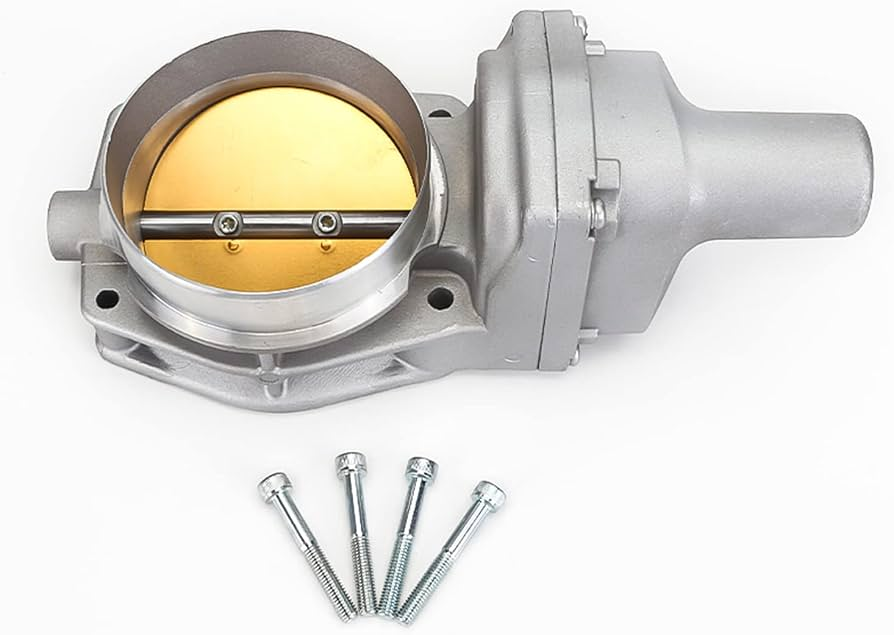
Drive-by-Wire replaces the mechanical cable with an electronic control loop. When you push the gas pedal, sensors inside an Accelerator Pedal Position (APP) assembly send a voltage signal to the Engine Control Module (ECM) or Tactical Control Module (TAC module on Gen III systems). The ECM interprets your driver intent, evaluates engine operating parameters, and powers an electric motor mounted inside the throttle body to open or close the throttle plate.
Because the throttle plate is computer-controlled, DBW eliminates the need for a separate IAC valve—the ECM simply cracks the main throttle blade open a tiny fraction to maintain or adjust engine idle speed.
DBW became the GM factory standard starting on 2003+ Gen III truck engines and was used across virtually all Gen IV LS engines (LS3, LS7, L99, L92, etc.).
Pros of DBW
Integrated Cruise Control: Cruise control is handled natively inside the ECM software. Wiring cruise control often requires nothing more than sending a simple 12V switch signal to the ECM pinout.
Fewer Mechanical Failures: With no physical cable to stretch, route through the firewall, or bind against hot exhaust headers, DBW offers a clean engine bay appearance.
Smoother Drivability & Tuning Control: The ECM can smooth out abrupt throttle inputs, adjust throttle response curves, and precisely manage idle speed regardless of ambient temperature, AC load, or cold starts.
Simpler Engine Bay Aesthetics: Eliminating the IAC motor, TPS sensor plug, and mechanical cable bracket creates a much cleaner look on top of the intake manifold.
Cons of DBW
Pedal Mounting Challenges: You must mount an electronic GM pedal inside your footwell. Classic vehicles often require custom fabrication brackets, metal trimming, or aftermarket adapter plates to align the DBW pedal comfortably.
Perceived “Throttle Lag”: Factory DBW throttle maps include built-in torque management delays designed for vehicle stability and smooth shifting. While this can be tuned out, stock DBW setups can feel slightly less immediate than a cable setup.
Compatibility & Matching Restrictions: DBW components must match correctly. Mixing and matching TAC modules, throttle bodies, pedal assemblies, and ECMs across different GM model years (e.g., mixing 24X and 58X crank reluctor architecture components) can trigger “Limp Mode” or non-responsive throttles.
Key Differences: DBC vs. DBW in LS Swaps
| Feature / Metric | Drive-by-Cable (DBC) | Drive-by-Wire (DBW) |
| Throttle Actuation | Mechanical steel cable | Electric motor inside throttle body |
| Idle Control | Dedicated Idle Air Control (IAC) valve | ECM modulates main throttle blade |
| Pedal Type | Traditional mechanical lever pedal | Electronic pedal with position sensors (APP) |
| Cruise Control | Requires external cable module/vacuum servo | Handled natively by ECM software |
| Harness Requirements | Requires IAC & TPS sensor wiring | Requires pedal-to-TAC/ECM harness harness wires |
| Tuning Complexity | Simple, traditional spark/fuel tuning | Requires pedal-to-throttle mapping adjustments |
| Engine Bay Look | Visible cable, bracket, and sensor plugs | Clean, single-plug throttle body design |
Which One Should You Choose for Your LS Swap?
Choose Drive-by-Cable (DBC) if:
You want maximum pedal response: Ideal for manual transmission street machines, drifting, auto-cross, or drag racing where instantaneous engine response is paramount.
You are swapping an early Gen III engine (1997–2002): Retaining the factory PCM (PCM red/blue 411 ECM) and cable setup saves time and harness rework.
You want to keep your factory pedal and firewall untouched: If your classic car or truck already has a clean, functioning mechanical throttle rod or cable assembly, DBC requires zero footwell fabrication.
Choose Drive-by-Wire (DBW) if:
You are using a Gen IV engine (2007+): Engines like the LS3, L92, or L99 were designed exclusively around DBW systems and 58X reluctor wheels.
You want integrated cruise control: DBW makes adding functional cruise control to a long-distance cruiser or restomod truck remarkably easy.
You prefer a clean engine bay: DBW eliminates clutter around the intake manifold, making it popular for show cars and modern engine bay aesthetic builds.
There isn’t a right or wrong answer here. Any LS engine can be adapted to have either style throttle body. With the amount of aftermarket support for computers, throttle pedals, and throttle bodies, swapping things around isn’t a huge task like it used to be. As you can see, both have their pro’s and con’s, but one isn’t necessarily better than the other.
If you have any other questions or need parts for your LS Swap, hop on SS396.com or give our friendly techs a call at (203) 235-1200!