Few vehicles have crossed over from workhorse to cultural icon as successfully as the Chevrolet C10. What started as a half-ton pickup built to haul lumber and feed sacks has become one of the most customized, restored, slammed, LS-swapped, and obsessively detailed platforms in the classic truck world. From straight-axle early ’60s rigs to coil-sprung square bodies, the C10 evolved dramatically over three decades but is still easily recognized.
In Chevrolet truck language, the letter tells you the drivetrain and the number tells you the capacity. “C” means two-wheel drive. “K” means four-wheel drive. The “10” designates half-ton. So a C10 is a two-wheel-drive half-ton truck. A K10 is the same capacity with four-wheel drive. Move up to a 20 or 30 and you’re in ¾-ton or 1-ton territory. When enthusiasts talk about “C10s,” they’re usually referring to half-ton two-wheel-drive trucks from the 1960–1987 era, even though later trucks technically carried slightly different naming conventions.
1960–1966 C10: The First Modern Chevy Trucks
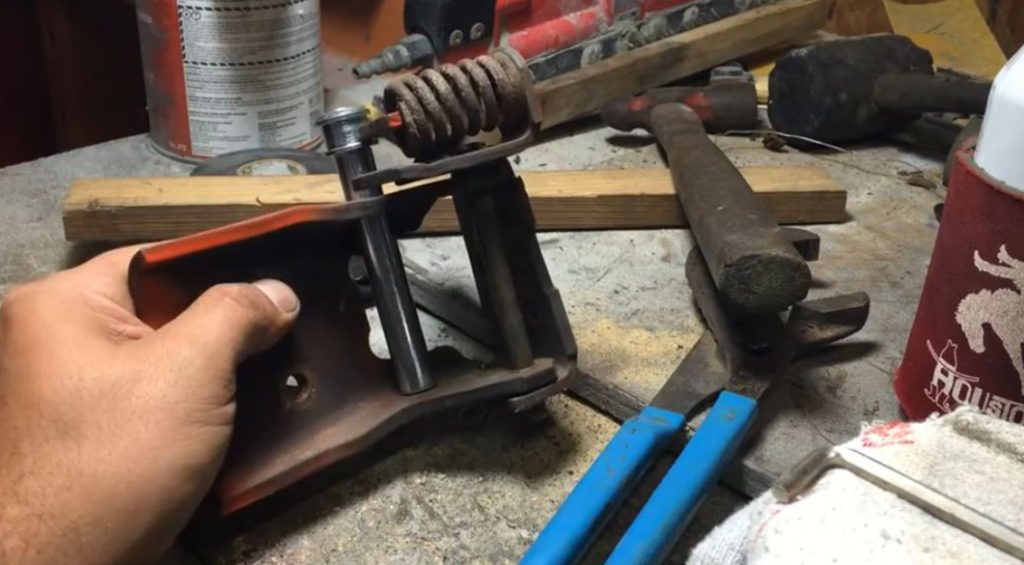
The 1960 model year marked a major shift for Chevrolet’s truck line. These were part of GM’s C/K Series and introduced a more car-like driving experience. Independent front suspension replaced the old straight axle in two-wheel-drive trucks, and the rear suspension used coil springs with trailing arms, often referred to as the “truck arm” setup. That suspension layout would influence Chevy truck handling for years to come and remains a favorite in performance applications.
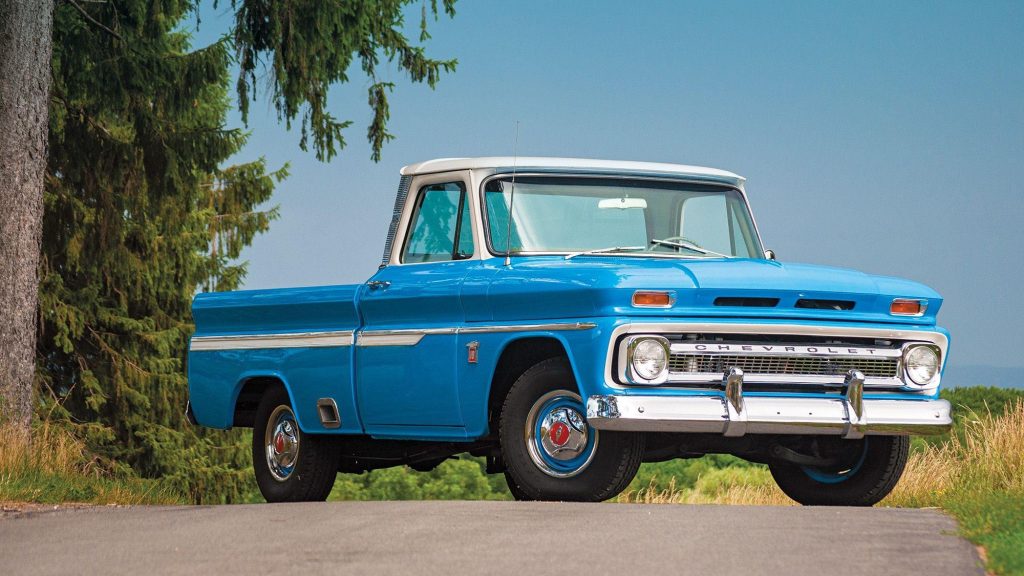
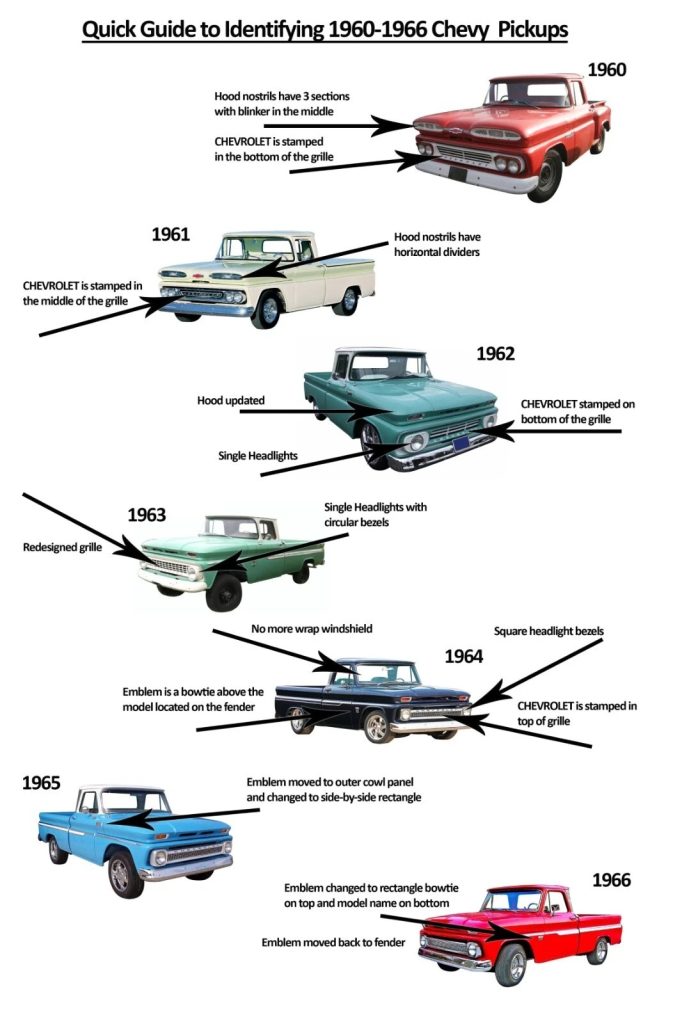
The 1960–1963 trucks are easy to identify thanks to their wraparound windshield, often nicknamed the “knee knocker” because of how far it curved into the cab corners. The 1960 and 1961 models featured distinctive oval “eyebrows” on the hood above the headlights. In 1962, those eyebrows disappeared, giving the front end a cleaner look.
For 1964, Chevrolet flattened the windshield and revised the cab slightly. The side glass shape changed, and the truck took on a more squared, modern appearance. From 1964 through 1966, visual differences were subtle, primarily grille designs, trim placement, and emblem details. To the casual observer, these mid-’60s trucks are nearly interchangeable, but to seasoned enthusiasts it’s easy to spot the differences.
Mechanically, these trucks were simple and rugged. Inline-six engines were common, though small-block V8 options were available and increasingly popular. Today, this generation appeals to builders who love early ’60s styling but want better suspension geometry than the 1950s straight-axle trucks.
1967–1972: The “Action Line” and Peak Classic Styling
The 1967–1972 generation is often considered the sweet spot of classic C10 design. These trucks are sometimes referred to as the “Action Line” series. With sharper body lines, more aggressive front ends, and improved interiors, they struck a balance between utility and style that’s still popular today.
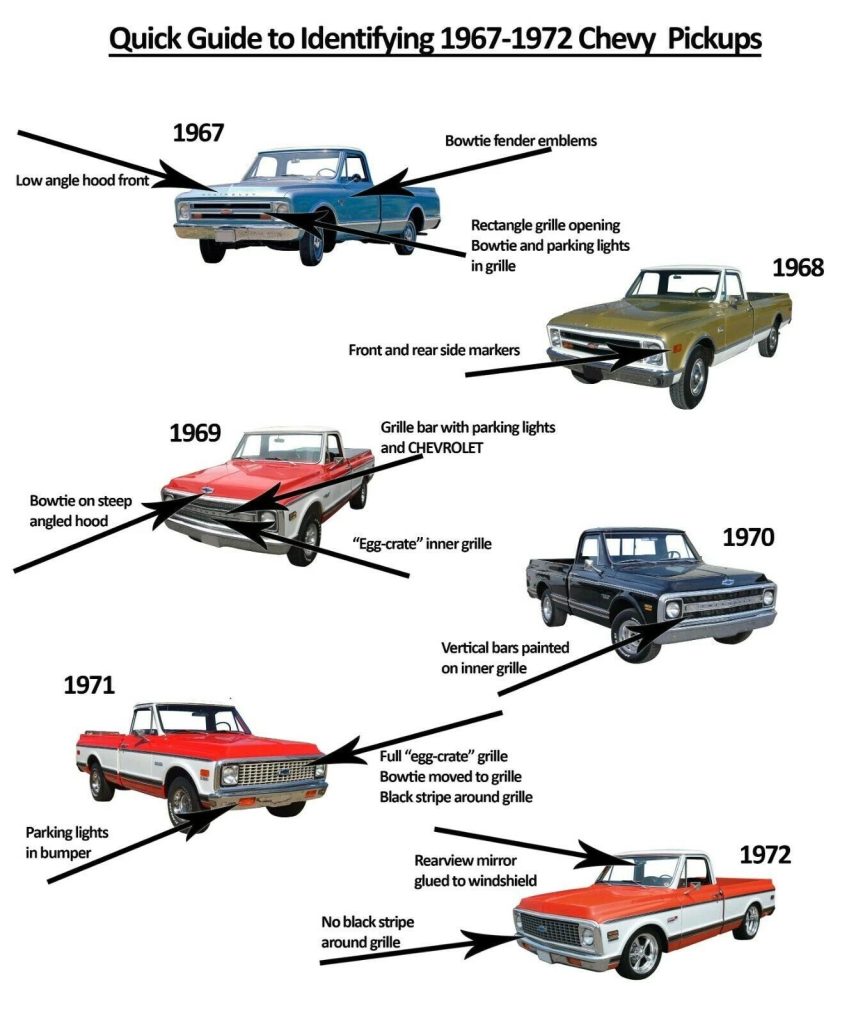
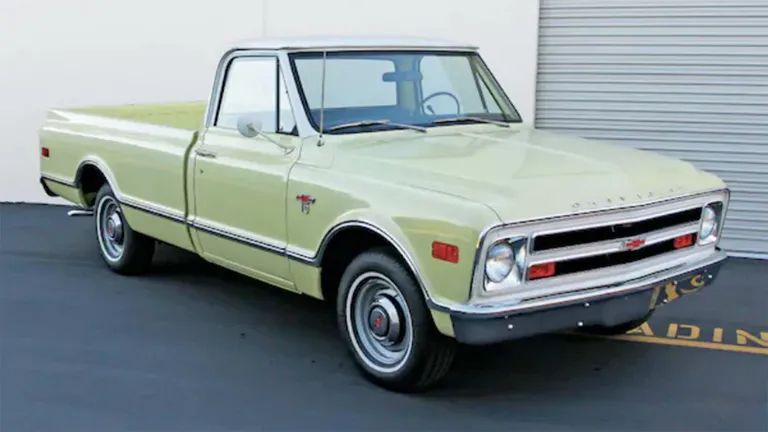
The 1967 and 1968 models are instantly recognizable by their smoother, molded-looking grille and more gradual hood slope. The 1967 trucks lack side marker lights entirely, as federal regulations had not yet mandated them. In 1968, side marker lights appeared on the front fenders and rear bedsides. Another 1967 hallmark is the smaller rear window. By 1968, most trucks featured a larger back glass, which would remain through 1972.
In 1969, Chevrolet revised the front end significantly. The hood slope became more pronounced, giving the truck a tougher, more upright stance. The grille design changed, and the truck gained a more rugged appearance. The 1970 models look similar to 1969 but feature subtle grille pattern changes—horizontal elements replacing the earlier grid-style insert.
For 1971, the grille evolved again, adopting a cleaner egg-crate design with a prominent Chevrolet bowtie. Turn signals moved into the front bumper, and front disc brakes became standard on many models. This is an important mechanical milestone, as 1971–1972 trucks came with five-lug hubs using a 5-on-5 bolt pattern, making wheel upgrades easier.
The 1972 model year remained largely unchanged, but one detail distinguishes it: the rearview mirror mounted to the windshield rather than the cab roof. It’s a small but definitive spotter’s clue.
This generation remains extremely popular because it combines classic lines with relatively simple mechanical systems. The chassis responds well to suspension upgrades, LS swaps, and modern brake conversions. It’s no surprise that short-bed ’67–’72 trucks dominate the custom truck scene.
1973–1987: The Squarebody Era
The next major redesign arrived in 1973. These trucks are commonly called “Square Bodies,” though Chevrolet officially marketed them under the C/K series. The nickname comes from their boxier styling of straight lines, flatter panels, and a wider, more planted stance.
The 1973–1980 trucks share a similar front-end structure but can be identified by grille and trim changes. Early models featured more chrome and thinner grille inserts, while later ’70s versions leaned into larger plastic grille components and more angular details. The hood lines are flatter and broader than the previous generation, emphasizing width.
In 1981, Chevrolet performed a significant facelift. The front clip changed entirely, with a new hood, fenders, and grille design. The headlights were more integrated into the grille area, and the overall look became cleaner and more modern. This 1981–1987 body style is easy to spot once you compare it side by side with the earlier square bodies.
Underneath, the Squarebody trucks retained coil-sprung rear suspension in two-wheel-drive models but featured updated frames and improved braking systems. These trucks also introduced more creature comforts. By the mid-1980s, fuel injection began appearing in some configurations, and interior refinement improved substantially.
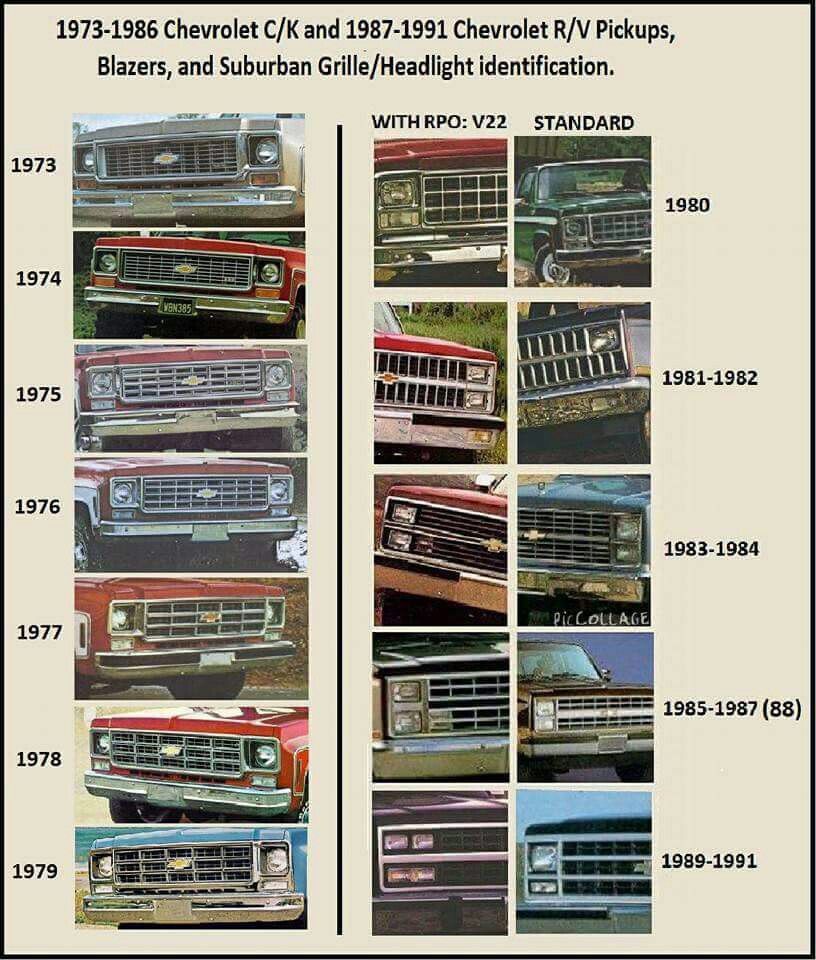
The Squarebody era is significant because it bridges old-school simplicity with modern drivability. These trucks can be built into comfortable cruisers, capable tow rigs, or aggressive pro-touring style builds. Their boxy proportions also make them highly adaptable for lowered “street truck” builds or lifted 4×4 setups.
Fleetside vs. Stepside
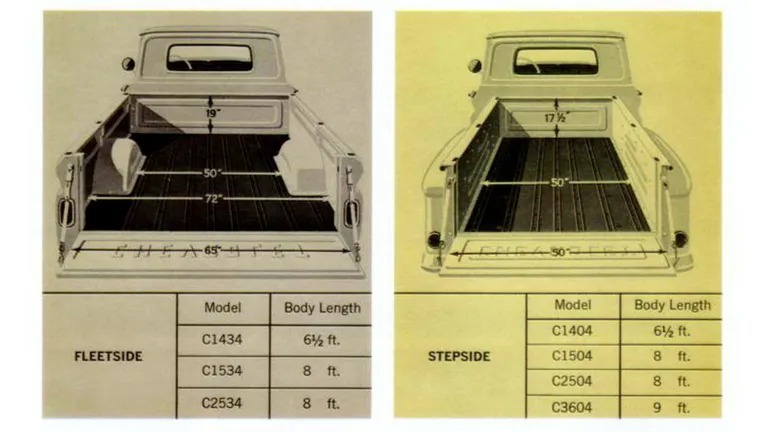
Across all these generations, Chevrolet offered two primary bed styles. The Fleetside bed features smooth, flat bedsides that align with the cab’s body lines. The Stepside, also known as a Fenderside in earlier literature, has external rear fenders with a step between the cab and fender.
Fleetsides tend to be more popular in the custom scene because of their clean lines and larger cargo area. Stepsides offer a more vintage, utilitarian aesthetic. Both have their fans, but Fleetside short beds command the strongest resale values today.
Wheelbase and Bed Length
In the half-ton world, wheelbase plays a major role in both aesthetics and performance. Short-wheelbase trucks typically measure 115 inches in earlier generations and are often referred to as “short beds” or “short boxes,” with approximately 6½-foot beds. Long-wheelbase trucks measure around 127 inches and use 8-foot beds.
There were also specialty versions like the “Longhorn,” stretching to around 133 inches, though these are less common.
Short beds are generally preferred in the custom market due to their proportions. They look more balanced when lowered and are lighter. Long beds, however, remain practical for hauling and can be just as striking when properly built.
Why the C10 is Still Awesome
What makes the C10 so enduring isn’t just its iconic styling, it’s also how easy they are to modify. The chassis accepts modern drivetrains easily. Aftermarket support is massive. Suspension systems range from factory-style rebuilds to fully engineered coilover conversions. LS swaps are almost expected at this point. Brake upgrades, steering improvements, and interior modernization are all straightforward.
Yet the trucks are still simple enough that a home builder can work on them without specialized tools or proprietary electronics. That balance of simplicity and upgrade potential keeps them relevant.
If you have any questions about your C10 truck, give our friendly techs a call at (203) 235-1200 or hop on SS396.com!